

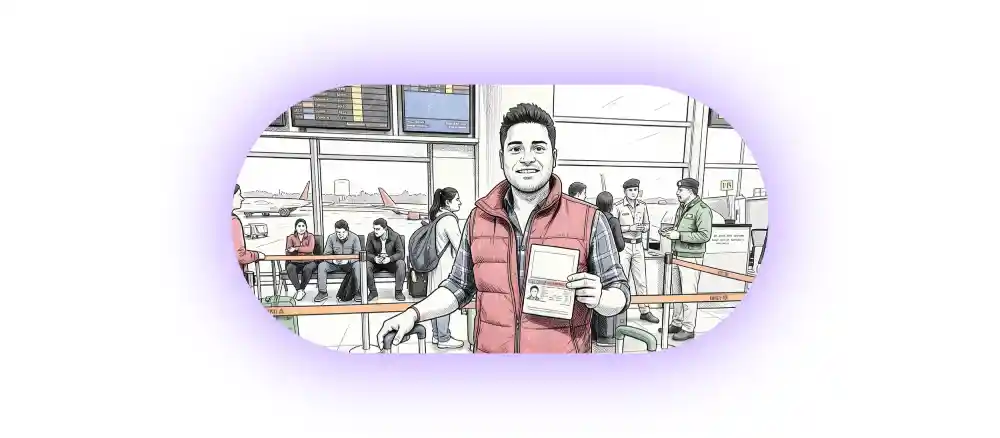
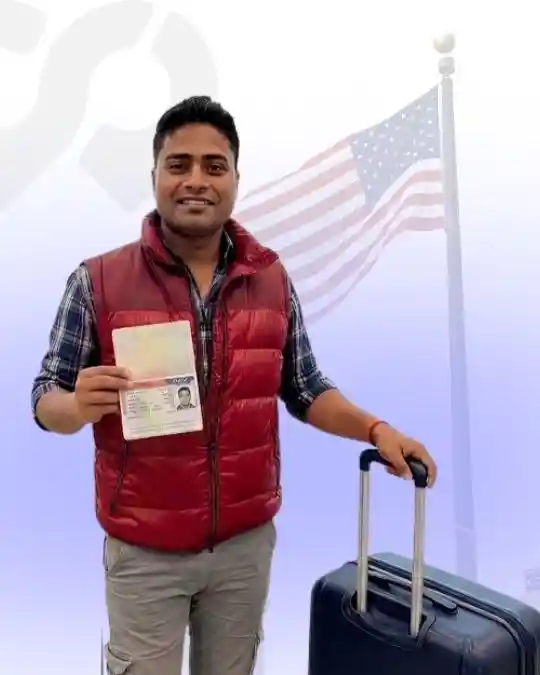
Everyone told Siddharth a single accountant with no house and no travel history would be refused. His US visitor visa was approved anyway — so he could finally meet a nephew he'd only seen on video calls.
The Math Everyone Got Wrong About Siddharth Kulkarni
Siddharth Kulkarni's US visitor visa was issued on February 12, 2024. It's been about a month now, and he still hasn't quite stopped mentioning it to people who already know. Siddharth is 28, an accountant at a mid-sized manufacturing company in Pune, India, where he's worked for six years since finishing his commerce degree. He's single, lives at home with his parents, and owns one car, a secondhand hatchback he's still paying off in monthly installments. He had never applied for a visa of any kind before this one — no passport stamps from anywhere, not even a neighboring country.
That last part worried him more than anything else. A colleague at his office, Rohan, had applied for the same kind of visa the year before and been refused. The letter he got said, in the standard wording, that he hadn't overcome the presumption that he intended to stay. Rohan is also single, also renting instead of owning, also someone with a stable job and not much else on paper. He told the story to anyone who asked, a little bitterly, for weeks afterward. It made its way around the office fast, the way refusal stories tend to.
By the time Siddharth mentioned he was thinking of applying himself, at least four people, unprompted, told him some version of the same thing:
“Single, no house, no travel history. Don't waste the fee.”
His sister, Kavya, has lived in the US for a few years now, since she got married. Her husband works in tech in the Bay Area; they had a son this past year, Arnav, Siddharth's first nephew. So far, Arnav exists for him only as a baby on a video call screen, usually being held up to the camera by Kavya for thirty seconds before losing interest. That was the entire reason for applying in the first place.
Nothing more complicated than wanting to hold a baby who is, technically, his own family.
He spent a weekend reading everything he could find about “strong ties,” most of it in the comments sections of visa YouTube channels. Most of it boiled down to the same three requirements, repeated with total confidence: a spouse, a house, and a vague sense of dread if you had neither. He nearly talked himself out of applying twice that same weekend.
He found Utter Vision through one of those same YouTube comment threads, where someone had linked it as an actual alternative to the fear-based advice everywhere else. What it told him was less dramatic than what he'd been reading:
An officer isn't running through a checklist. They're deciding in about two minutes whether the story in front of them holds together on its own terms.
A steady job he'd held for six years. A car loan he was actively paying down every month. Parents he lived with and helped support. A short, specific trip with a return flight already part of the plan, timed around his sister's maternity leave ending. It wasn't the strongest file in the world, and the portal didn't pretend otherwise.
It was, at least, complete and honest.
That turned out to matter more than he'd assumed. He filled out the DS-160 form over two evenings, printed it, and then, on his mother's insistence, practiced answering questions out loud at the kitchen table, with her playing the visa officer. She asked, “Why should I believe you'll come back?” so sternly the first time that he actually laughed, which he says was more useful practice than the real interview turned out to be.
The Interview
He took the train down to Mumbai the day before his appointment, since the slot was early morning, and stayed one night at a cheap hotel near the consulate so he wouldn't risk being late. The queue outside the next morning was long, mostly families and a few students, everyone holding the same manila folder of documents. The interview itself, once his turn came, took a few minutes.
What do you do? Who's paying for the trip? How long will you stay? When do you go back to work? He answered plainly, didn't oversell anything, and didn't try to sound more settled in life than he actually was. The officer typed something, stamped his passport, and told him to enjoy the visit.
February 12, 2024
Siddharth's Visa Was Issued.
He called his sister from the sidewalk outside the consulate before he'd even found the way back to the train station. As of now, about a month later, he hasn't traveled yet. His flight is booked for later this month, and he's already arranged the leave from work, clearing it with his manager weeks in advance the way he clears everything.
He's bought Arnav a small toy he isn't sure is age-appropriate and has decided he doesn't care. His nephew, for a little while longer, is still just a voice and a face on a phone screen, usually crying by the time the call actually connects.
Siddharth says the thing nobody mentioned, in any of the videos or the office warnings, was this:
“Strong ties” was never really about having a spouse or a house sitting in your name.
It was about whether the whole picture, laid out plainly, made sense as a reason to come back. His did.
He just needed someone to say that plainly before he believed it over everything else he'd been told.
 WhatsApp
 Twitter
 FaceBook
 Linkedin