


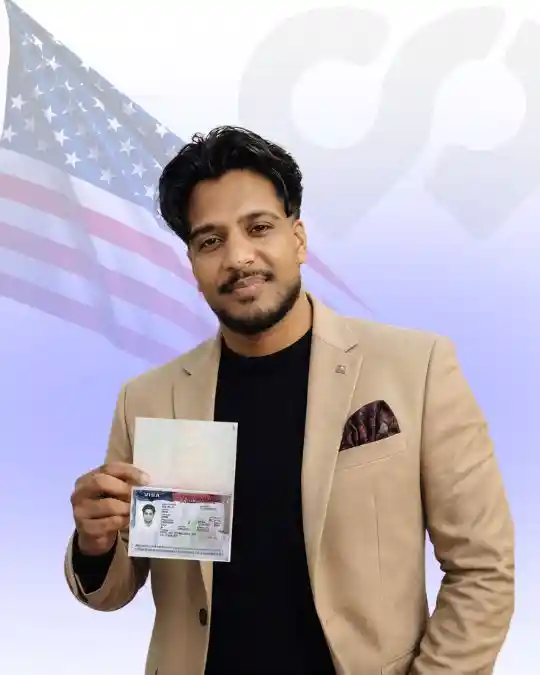
Getting selected in the H-1B lottery took Rohan three tries — then the real risk was a paperwork gap between his OPT ending and his H-1B starting. Utter Vision helped him verify his own SEVIS record and later prepare his consular interview for the actual visa stamp.
Selected on the Third Try. After That, There Was No Room for a Single Late Form.
Rohan Desai's H-1B visa was issued March 25, 2024, on his third try at a lottery he had no control over, followed by a timing window that had no room left for a single late form.
Rohan is single, from Pune, India, born July 12, 1989. He studied computer engineering at the College of Engineering Pune, then came to the US for a master's in computer science, and stayed on afterward through Optional Practical Training, the standard work authorization that lets international graduates work for a period after finishing a degree — twelve months initially, extended to three years total since computer science qualifies for the STEM extension.
An H-1B visa can't be applied for directly. A US employer has to sponsor it, and because far more people want one each year than the government allows, most cap-subject applicants first have to be selected in an electronic lottery before an employer can even file the actual petition. Rohan's employer registered him for two consecutive years without a selection, the kind of outcome so common among his own friend group that nobody treated a lottery miss as bad news exactly, just an expected disappointment. He was finally selected the following spring.
Selection wasn't the end of the pressure, though. Rohan's STEM OPT work authorization had its own expiration date, and if the H-1B petition wasn't filed, and specific extension paperwork wasn't handled correctly and on time, there was a real risk of a gap between his OPT ending and his H-1B status beginning — a period with no valid work authorization at all, something called cap-gap protection exists specifically to prevent, but only if every piece of it is filed correctly and on schedule.
Rohan found Utter Vision while trying to understand exactly what cap-gap protection actually required from his own side, since his employer's immigration counsel was handling the company's petition but couldn't necessarily walk him through his personal SEVIS record and what he needed to verify himself. The guidance was specific to his half of the process: confirming his school's international student office had correctly noted the cap-gap extension on his SEVIS record and updated I-20 once the petition was filed, and keeping copies of every confirmation himself rather than assuming paperwork moving between an employer's lawyers and his university had gone through cleanly.
The petition was approved that summer, and Rohan's status shifted from OPT to H-1B on October 1, without a single day unaccounted for. What he didn't have yet was an actual visa stamp in his passport, since his existing one only covered his student status, and getting a new one meant a trip to a US consulate, which meant, conveniently, a trip home.
He flew to Pune that winter, the first time he'd seen his parents in person in almost three years, and used Utter Vision again for the second half of the process: preparing his DS-160 form and organizing his consular interview documents — his approval notice, recent pay stubs, his employer's offer letter, and a clear explanation of his continuous status history from F-1 through OPT to the now-approved H-1B, so an officer reading the file could follow the whole timeline without any unexplained gaps standing out.
The interview at the US Consulate in Mumbai covered his job, his employer, and his plans, and the visa was issued March 25, 2024, in plenty of time for a proper visit home before flying back.
Rohan spent five weeks in Pune, longer than he'd originally planned, mostly because his mother kept finding reasons the return flight could wait another few days. He flew back to the US that spring and returned to the same job, now under a visa category that no longer had an expiration date tied to a degree program.
His parents have already started asking about a return trip, this time with talk of them visiting him instead, an idea Rohan has been quietly encouraging more than he initially expected to.
Rohan says the lottery gets all the attention, since it's the part with the odds and the suspense, but the part that actually could have cost him something was the quiet, unglamorous paperwork in between — the exact dates, the exact confirmations, the parts nobody warns you are just as unforgiving as the lottery itself.
 WhatsApp
 Twitter
 FaceBook
 Linkedin