


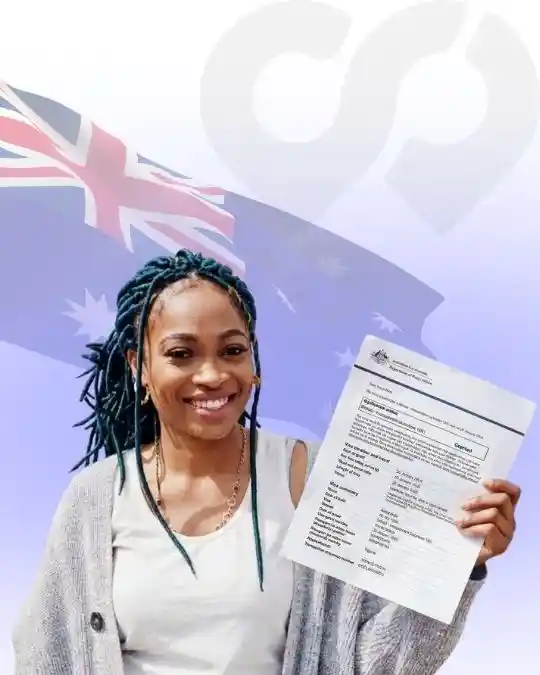
Aisha nearly pursued the wrong visa entirely before her own research pointed her toward Australia's Skilled Independent visa instead. Utter Vision then helped her organize nine years of teaching records into a skills assessment that came back fully certified, with no gaps or discounts.
Aisha Bello's Skilled Independent visa, subclass 189, was granted January 29, 2024, on a plan that started out as something else entirely.
Aisha is 33, single, from Kano, Nigeria, and has taught secondary school mathematics for about nine years. She began by looking into an Australian study visa, the path most people she knew had taken, before her own research turned up something that fit her situation better: with nine years of teaching already behind her, the skilled migration route looked considerably more direct than starting over as a student. She spent weeks after that reading everything she could find about the skilled independent pathway, and consulted a couple of immigration lawyers along the way, mostly to confirm the broad shape of the process rather than the specifics of her own file.
What she came away with was the correct general order: check that her occupation and age qualified at all, pass an English test, get a formal skills assessment, calculate her points, then submit an expression of interest. The assessment, everyone she spoke to agreed, was the part that actually mattered most, since a weak or poorly documented one could undercut everything calculated afterward. She studied for her English exam first, on the reasoning that nothing else could proceed without it, and passed comfortably.
Facing the assessment itself, though, she realized how little any of her research had told her about the part that actually mattered: how to present nine years of teaching salary and job duties in a way an assessing body would read cleanly, rather than question or discount. Consultants had explained what an assessment was. Nobody had shown her how to make her own specific employment history and salary history look consistent and complete on paper, and she'd heard enough secondhand stories of assessments coming back reduced or incomplete to be genuinely nervous about getting hers wrong the first time.
A friend who'd gone through her own skilled migration process the year before told her about Utter Vision. Working through the portal, Aisha learned exactly how to organize her employment letters, salary records, and duty descriptions so they lined up logically year to year, with no unexplained gaps or figures that looked inconsistent next to each other, the specific kind of thing an assessing authority checks closely before certifying someone's experience. She pulled together and reorganized nine years of documents in under three weeks, something she'd expected to take considerably longer given how disorganized her records had been when she started.
The assessment came back positive, clean, and fully certified across her whole employment history — no reduced years, no discounted duties. With that in hand, she calculated her points properly for the first time, submitted her expression of interest through SkillSelect, and received an invitation to apply within the following round.
From there, the sixty-day clock started, and Utter Vision's role shifted to the formal application itself: her police clearance, a scheduled medical exam, and the full document set assembled well inside the deadline. Lawyers on the platform reviewed the finished submission before it went in, catching a passport expiry date that would have needed separate handling if left unnoticed.
The visa was granted January 29, 2024. Aisha moved to Perth that April, and spent her first months navigating the process of getting her teaching qualification recognized for local classroom work, substitute teaching within her first year while the fuller registration worked its way through in the background.
Her parents, still in Kano, ask on most calls whether she's found a proper Nigerian restaurant yet. The friend who first mentioned Utter Vision still checks in occasionally, mostly to compare notes on how their new lives compare, an ocean and a continent apart from where either of them started.
Aisha says the real lesson wasn't about the visa category at all — it was that she almost applied for the wrong thing entirely before her own research corrected course. Once she was on the right path, the assessment was never really about proving nine years of teaching were real. It was about presenting them clearly enough that nobody reviewing the file had any reason to doubt it.
 WhatsApp
 Twitter
 FaceBook
 Linkedin