

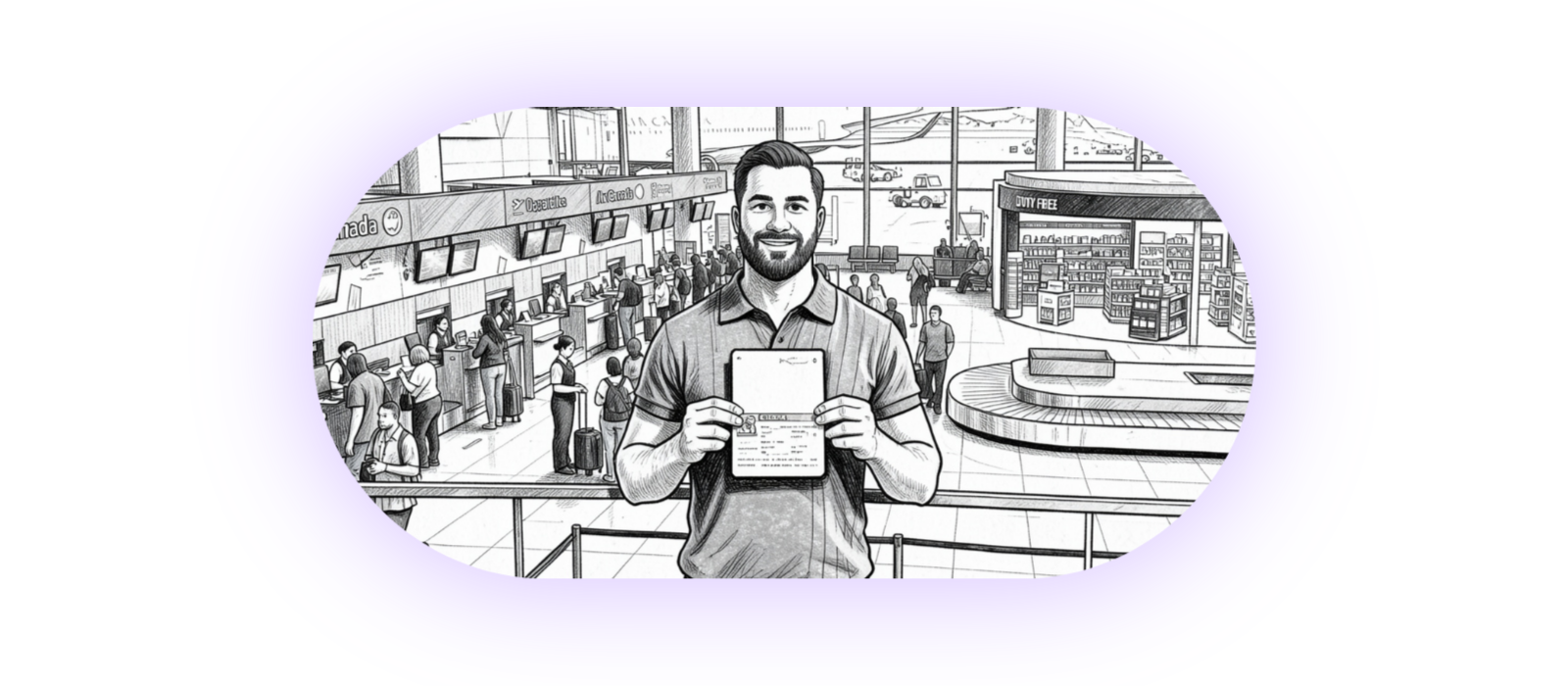
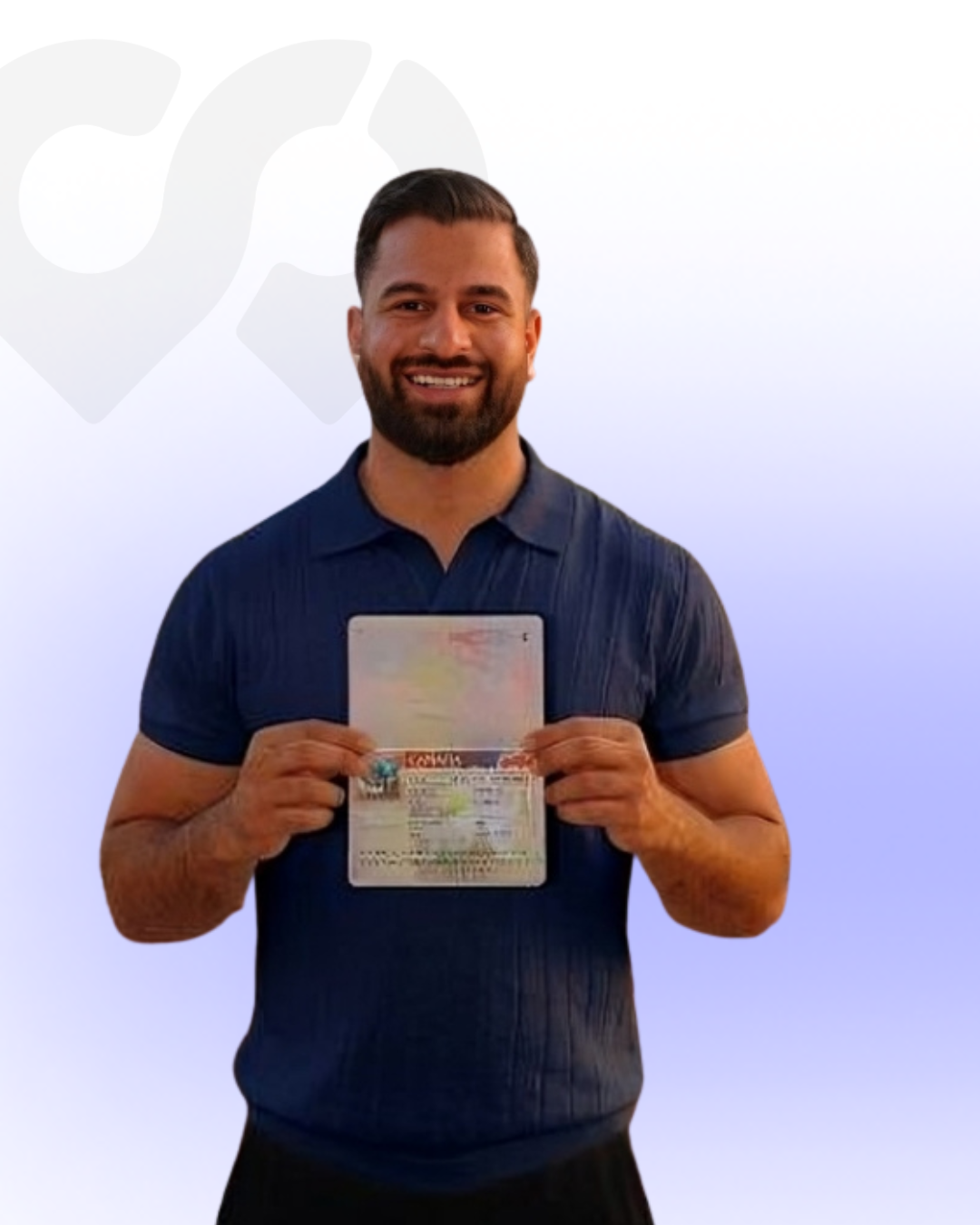
David failed the English test twice before passing on his third try. Once he had his acceptance letter, Utter Vision helped him turn five years running his family's trucking business into the case his Canadian study permit needed.
The Real Application Was Sitting in a Truck Yard the Whole Time
David Mwangi's Canadian study permit was issued March 8, 2024, months after the part of the process that had actually taken him the longest: passing the English test.
David is 27, from a village near Jalandhar, in Punjab. His father, Baldev, started the family transport business more than twenty years ago with a single secondhand truck, hauling grain and fertilizer between mandis in the harvest season and whatever else paid the rest of the year. By the time David was in college, the business had grown to three trucks and a small warehouse Baldev rented near the highway.
David finished a B.A. in Economics at Guru Nanak Dev University in Amritsar, commuting most days rather than staying in the hostel, and joined the family business full time the same month he graduated. There wasn't a formal conversation about it. It was simply understood that he'd help while he figured out what came next, and five years passed before "what came next" turned into an actual plan.
He mostly handled scheduling and client relationships, the parts of the business that ran on phone calls and relationships rather than driving, while his father and older brother, Harpreet, managed the trucks and the drivers themselves. Harpreet runs the day-to-day dispatching entirely on his own now, which is part of why David could eventually leave without the business missing him in any practical sense.
Five years managing freight schedules had done nothing for the specific kind of English the IELTS exam wanted. David could talk his way through a rate negotiation in three languages without much trouble, switching between Punjabi, Hindi, and English mid-sentence without noticing he was doing it, but the exam wanted timed essays and structured spoken answers to questions about topics he'd never had reason to discuss, like public transportation policy or the environmental impact of tourism.
His first attempt came back under the score his target program needed, mostly on the writing section. He bought a stack of practice books, worked through them most evenings after the trucks were logged in for the day, and retook it four months later.
He missed it again.
By less this time, still not enough.
His mother started leaving his dinner on the table without calling him to it, since he was usually still at the kitchen table with a practice essay in front of him past the point anyone else in the house was still awake.
People around him had opinions about that particular problem, the way people always do. A cousin mentioned an agent two towns over who could arrange a passing score for a fee, no studying required, the kind of arrangement everyone in that part of Punjab has heard about at least once.
David didn't seriously consider it.
Not out of any speech he'd give about it, just a plain sense that a fake score wouldn't actually teach him anything he'd need once he was sitting in an actual Canadian seminar room, expected to keep up with a discussion in real time.
He retook the test a third time, four months after the second attempt, and finally cleared the score his program wanted, by two points more than the minimum.
He applied to a university in Manitoba on his own that same season, for an M.A. in Economics with a focus on transportation and logistics, a natural enough extension of a B.A. he'd finished five years earlier and then set aside while he worked.
His acceptance letter arrived by email on an otherwise ordinary Tuesday.
He read it twice before telling anyone, the same instinct a lot of people apparently have about news that seems too straightforwardly good.
It was only after that, with the test passed and the acceptance in hand, that he started looking into the visa side of things and found Utter Vision.
The program had already accepted him. What he needed help with now was the study permit application itself — proof of funds, a clear financial picture built from both his own savings and his father's income, and a study plan letter written specifically for the visa file rather than anything he'd already submitted to the university.
The harder part of that file turned out to be explaining five years between his B.A. and this application, with nothing academic in between.
Utter Vision's guidance on the study plan was less about smoothing that gap over and more about naming it directly: five years managing freight scheduling, driver logistics, and delivery routes for a working transport company, described plainly instead of vaguely, was itself the reason a graduate focus on transportation economics made sense for him now, rather than a hole in his record he had to explain away.
He rewrote the letter twice, cutting anything that sounded like an excuse and keeping only what was specific and checkable.
He filed his study permit application in December 2023, with his acceptance letter, the financial file, and letters from two of his father's regular freight clients confirming what he'd actually been doing for them for years, on their own letterhead, with contact numbers included in case anyone wanted to check.
The permit was issued March 8, 2024, a little faster than he'd braced himself for after everything else had taken so long.
He flew to Manitoba that August and started his program in September, in a shared apartment with two other international students he'd found through a university housing board.
The cold wasn't what surprised him most, even though it arrived earlier and harder than anything Punjab had prepared him for.
It was how much of the coursework on transportation economics mostly put into words things he'd already been doing by instinct for years, long before he ever had to write an essay about any of it.
He's well into the program now, and picked up a part-time research assistant role in his second term, helping a professor collect freight-corridor data for a study on rural logistics, work that, he'll admit, reads like an academic version of what he used to do at home for considerably less money.
Baldev still runs the trucks with Harpreet, who has since started keeping his own set of scheduling notes the way David used to, mostly, he says, out of necessity rather than admiration.
David calls most weekends, and has started, according to his brother, giving unsolicited advice about route planning software the business has never formally used and probably now will, once he's back to actually install and explain it in person rather than over a bad phone connection.
David says the visa file itself was never really the hard part.
Once he had the acceptance letter and the passing score in hand, the rest was much more straightforward.
Those two things took him the better part of a year on his own, most of it spent at a kitchen table with practice essays nobody else in the house had the patience to read.
The application after that was just a matter of laying out, clearly and with documents to back it up, what was already true.
 WhatsApp
 Twitter
 FaceBook
 Linkedin